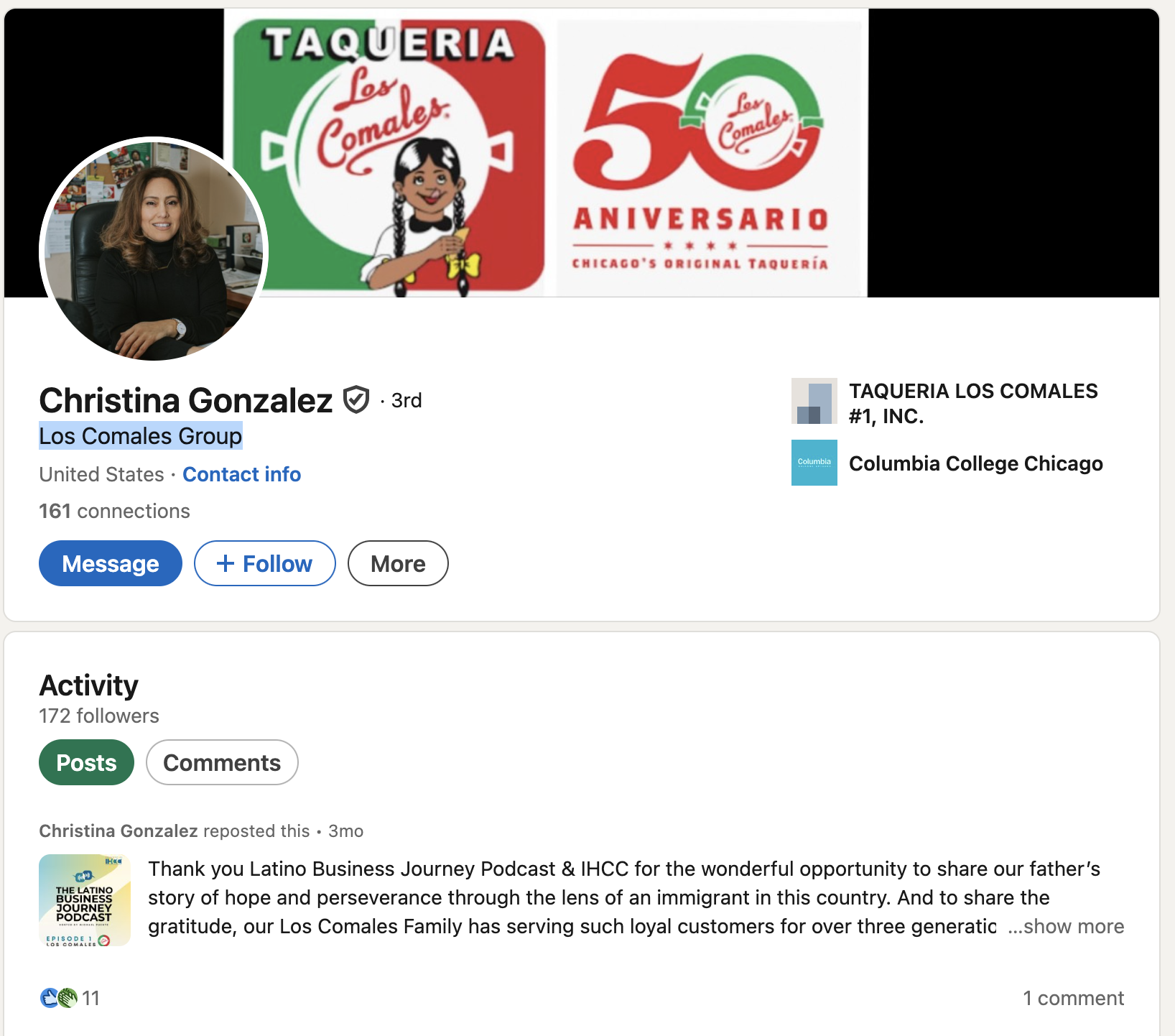
Christina Gonzales
Co-owner of Los Comales Group (Los Comales), corporate address: 3141 W 26th St., Chicago, IL 60623
Publicly Availble Information
Phone: 630-372-8130
Address: 210 Frontage Rd Willowbrook, IL 60527
Estimated Home Value: $541,000
Estimated Home Equity: $383,678
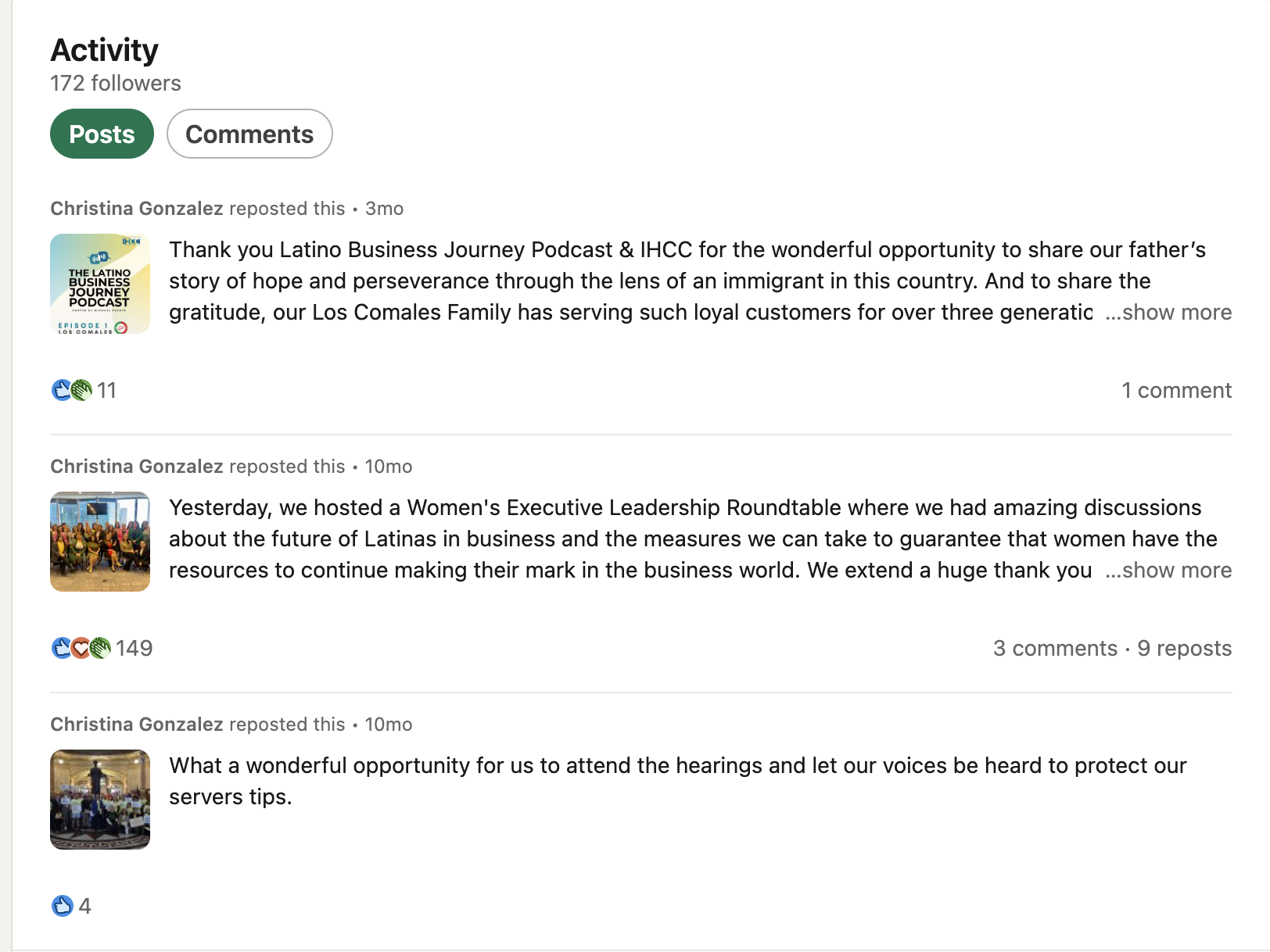
LinkedIn Profile Cached


Los Comales Group Issues DEATH THREATS to JOURNALIST!!
The following occured on 1/28/2025
Initially, I contacted Los Comales Group to inquire about a job opportunity. When they answered in Spanish, I requested a reasonable accommodation under the Americans with Disabilities Act (ADA) to speak with someone in English. I was transferred to what I believe was the co-owner, but before I could finish stating my name, they abruptly hung up. When I called back, the same person claimed they were filing a police report against me, seemingly in response to my request for an accommodation. It is unclear whether their actions were motivated by hostility toward my ADA request, discrimination based on my ethnicity, or both. Under Haines v. Cherokee County (2018), employers have a legal duty to engage in the interactive process when a disability accommodation is requested, and retaliation for exercising such rights is prohibited under Burlington N. & Santa Fe Ry. Co. v. White (2006). Additionally, Title VII of the Civil Rights Act of 1964 prohibits employment discrimination based on race, color, or national origin.
After this interaction, I discovered that the owner of Los Comales Group had publicly admitted in a news interview to knowingly aiding and abetting illegal immigration, which is a violation of 8 U.S.C. § 1324 (bringing in and harboring certain aliens). To determine whether management was aware of the legal consequences of these actions, I called one of their locations again. Once more, I had to request an English speaker before being connected to a manager who refused to identify themselves. As I began to assert the facts regarding their potential criminal conduct, the manager became irate, accused me of being racist, and implied that America was no longer for English speakers before abruptly hanging up.
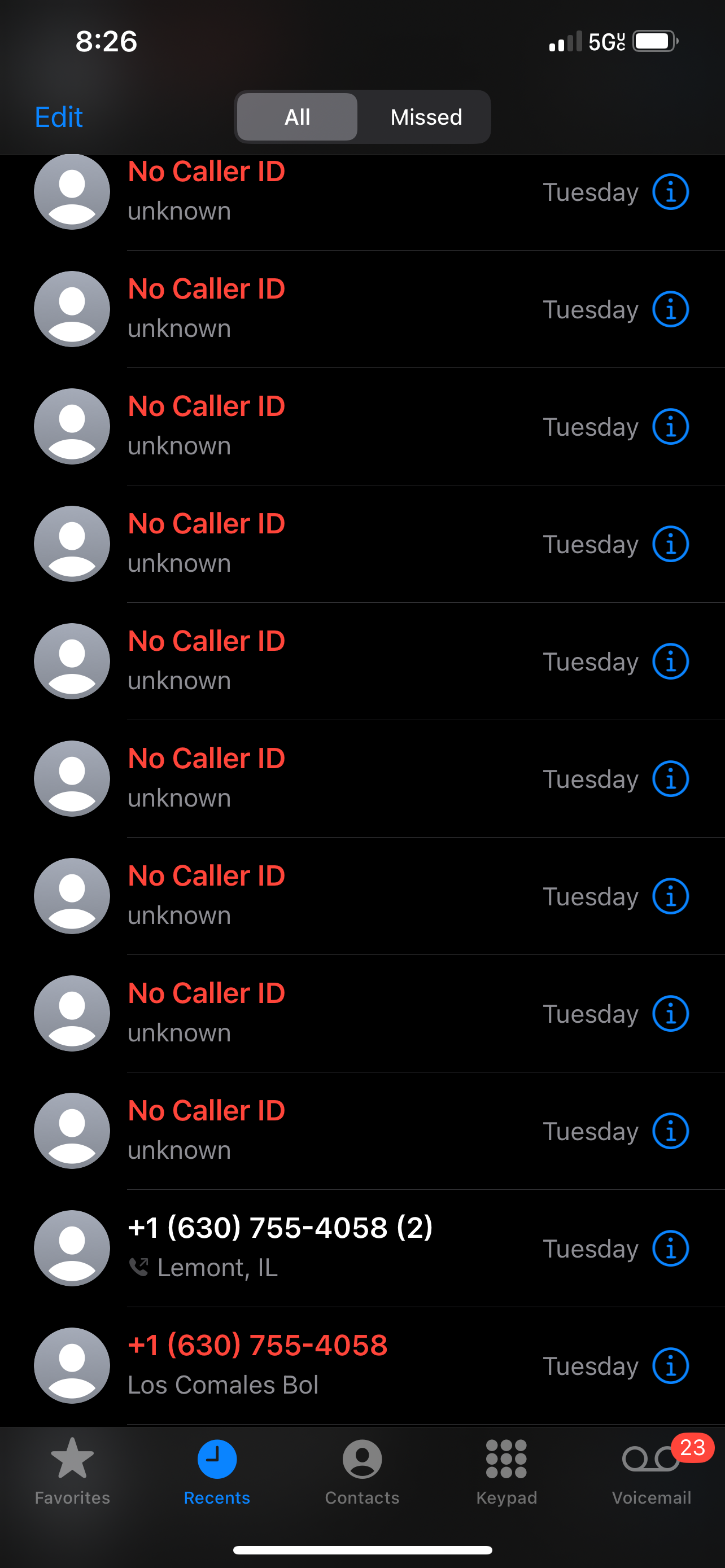
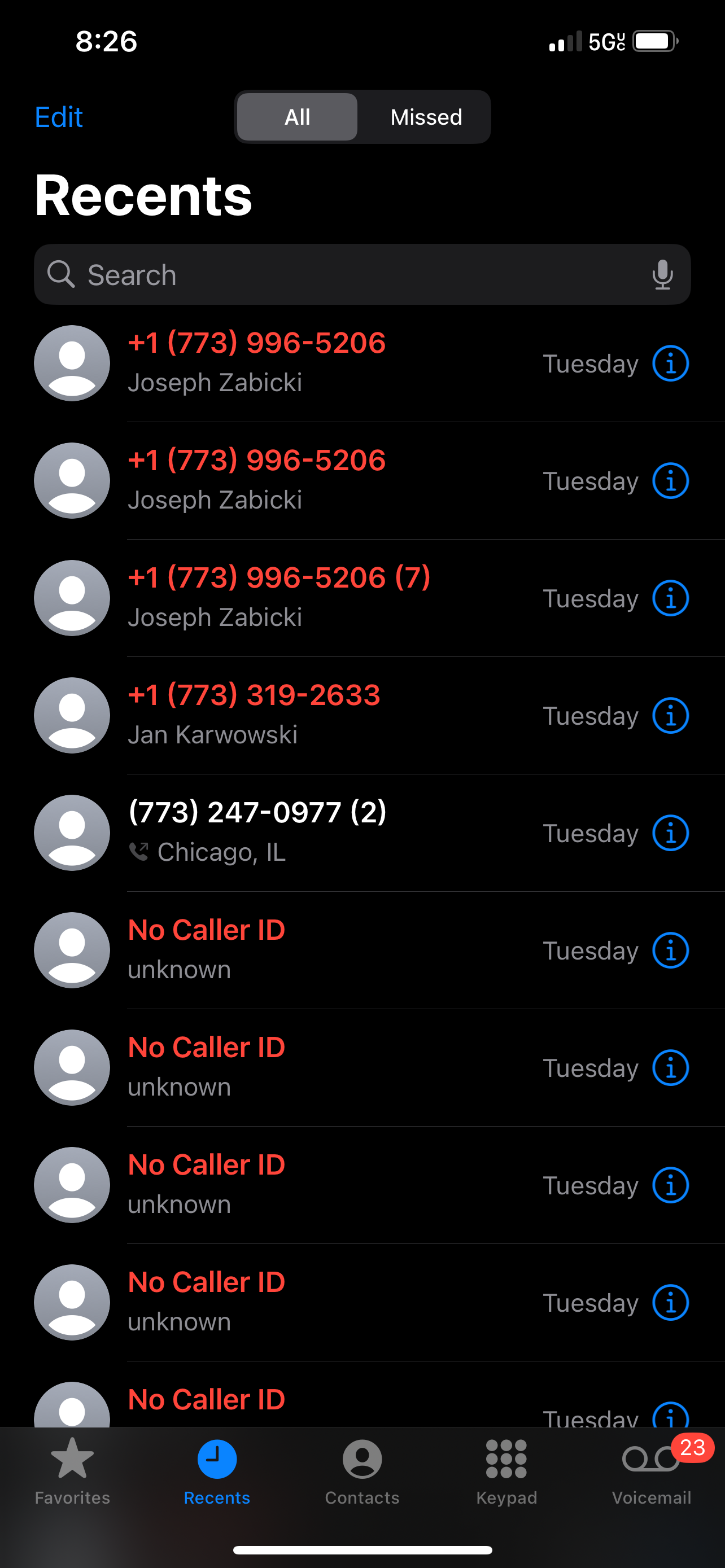
Within 30 minutes, I began receiving spam calls from an unidentifiable number. When the caller grew tired of harassing me, they (a female voice) left a voicemail containing a racist hate message towards my ethnicity, German/Dutch, and death threat (embedded audio evidence). About an hour later, the same individual called again but forgot to hide their number. A brief text exchange confirmed that they were responsible for the threat. Then, 70 minutes later, a second individual—this time a male—began spam-calling me, also without hiding their number. When they finally gave up, they too left a voicemail with a death threat (embedded audio evidence). Given the timing of these calls and the clear escalation, it appears highly likely that someone at Los Comales Group unlawfully disclosed my phone number to a third party for the purpose of harassment, intimidation, and retaliation. If so, this could constitute a criminal violation of my privacy rights and potential conspiracy under the Racketeer Influenced and Corrupt Organizations (RICO) Act.
The deliberate coordination of threats and harassment in response to a lawful inquiry raises serious legal concerns. Under U.S. v. Tobin (2006), coordinated efforts to harass or intimidate individuals through phone-based threats have been prosecuted under federal law. Furthermore, if a business conspires with others to intimidate, silence, or retaliate against individuals reporting unlawful conduct, this could satisfy the elements of a RICO violation (Boyle v. U.S., 2009). The intentional disclosure of my phone number for the purpose of coordinated threats and harassment may also constitute a violation of federal and state anti-doxxing laws, as seen in cases like U.S. v. Sayer (2015).
Given the coordinated nature of these actions, I believe a formal RICO investigation is warranted to determine whether Los Comales Group and its associates have engaged in an organized effort to intimidate, harass, or silence individuals exposing their illegal conduct. Additionally, law enforcement should investigate whether my personal information was unlawfully disclosed as retaliation (EEOC v. Cognis Corp., 2012). I urge authorities to take immediate action to hold those responsible accountable and prevent further threats or retaliation against individuals exercising their legal rights.
I believe I have several civil claims against Los Comales Group based on their actions. Their harassment and threats caused me severe emotional distress, which could qualify as Intentional Infliction of Emotional Distress (IIED) (Hustler Magazine, Inc. v. Falwell, 1988). If they disclosed my phone number to a third party who then harassed me, that could be a privacy violation (U.S. v. Sayer, 2015). Their refusal to accommodate my request for an English speaker, followed by hanging up and falsely accusing me of wrongdoing, may constitute disability or racial discrimination and retaliation under the ADA and Title VII (Burlington N. & Santa Fe Ry. Co. v. White, 2006). If they spread false claims about me, I may also have a defamation case (New York Times Co. v. Sullivan, 1964). Lastly, if their actions were part of a coordinated effort to intimidate and silence me, I could pursue a civil RICO claim (Boyle v. U.S., 2009). I plan to file police reports and report these violations to the EEOC and DOJ. If necessary, I will seek legal action to hold them accountable.
Recorded Threats
- Female Voice Issues Death Threat (from phone number: 773-319-2633)
- Male Voice Issues Death Threat (from phone number: 773-996-5206)
Spam Calls
Legal Citations:
- ADA & Retaliation: Burlington N. & Santa Fe Ry. Co. v. White, 548 U.S. 53 (2006); Haines v. Cherokee County, 2018
- Employment Discrimination: Title VII of the Civil Rights Act of 1964
- Criminal Harassment & Threats: U.S. v. Tobin, 2006; U.S. v. Sayer, 2015
- RICO & Conspiracy: Boyle v. U.S., 556 U.S. 938 (2009)
- Unlawful Retaliation & Disclosure: EEOC v. Cognis Corp., 2012